Running a small business is about more than just having a great idea—it’s about consistently setting the right activities that drive results every day, week, and month. Many entrepreneurs struggle not because their product or service is weak, but because they fail to establish clear, repeatable activities that keep the business moving forward. In this guide, you’ll learn exactly how to set activities small business owners need to succeed, from foundational startup tasks to daily operations and growth activities.
Why Setting Activities Matters for Small Businesses
For small businesses, time and resources are limited. Without structured activities, owners risk spreading themselves too thin, missing deadlines, and losing focus on what matters most—growth and sustainability. By setting the right activities, you turn big goals (like “increase sales” or “grow brand awareness”) into daily, achievable steps. In short, activities are the building blocks of progress.
Foundation: Startup Activities Every Small Business Must Set
When launching a small business, foundational activities should come first. These activities ensure your company is legally compliant and financially ready for operations:
-
Register the Business – Decide on the structure (LLC, sole proprietorship, corporation) and get the proper registration.
-
Apply for an EIN – Essential for taxes and payroll.
-
Obtain Licenses and Permits – Depending on industry and location.
-
Open a Business Bank Account – Separate personal and business finances.
-
Create a Business Plan – This is your blueprint for turning ideas into action.
By completing these startup activities, you establish a solid foundation before moving to operational and growth tasks.
Turning Goals Into Planned Activities
To learn how to set activities small business owners can actually follow, it’s important to start with a structured plan:
-
Business Plan → Activities: Translate goals into steps (e.g., “expand customer base” becomes “make 5 sales calls daily”).
-
Operational Plan: Break down long-term objectives into daily, weekly, and monthly actions.
-
Activity Calendar: Use digital tools like Trello, Asana, or even a spreadsheet to map out when and how tasks are done.
This structured approach keeps you accountable and ensures activities align with growth strategies.
Daily Activities for Small Business Success
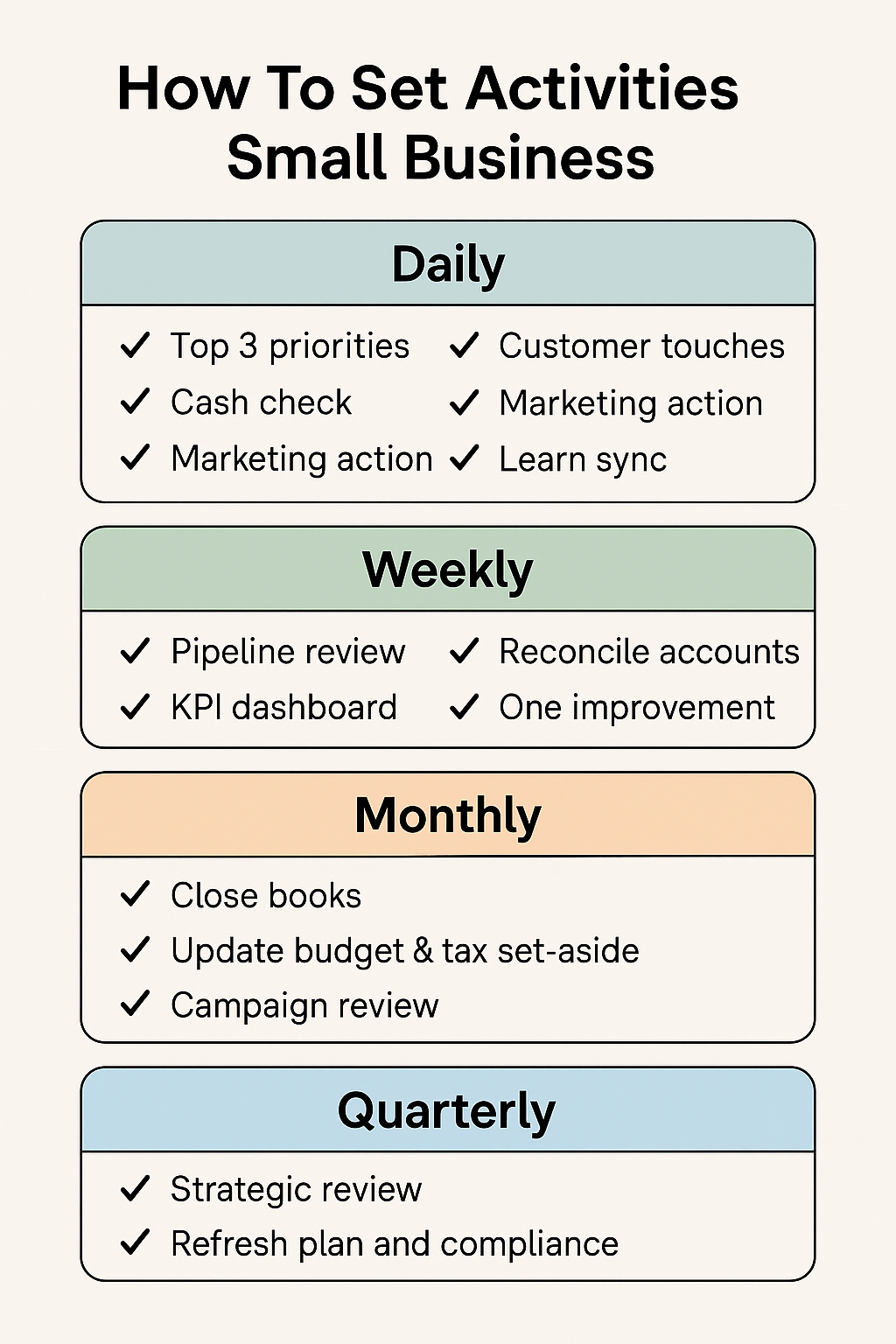
Daily routines make or break a small business. Owners should set a handful of non-negotiable daily activities that directly impact sales, customer satisfaction, and cash flow. Examples include:
-
Top 3 Priorities Each Morning – Identify your most critical tasks.
-
Customer Touchpoints – Follow up with leads, send emails, or respond to inquiries.
-
Cash Flow Check – Review income, expenses, and invoices.
-
Marketing Action – Post on social media, send one marketing email, or engage with your community.
-
Team/Supplier Sync – Quick check-ins to keep operations smooth.
-
Learning Activity – Spend 15 minutes improving your skills or market knowledge.
Consistency with these daily activities ensures that no important area is neglected.
Weekly Activities That Keep Businesses on Track
Weekly activities help you zoom out and assess progress. Owners should schedule time each week for:
-
Pipeline Review – Monitor leads, prospects, and sales opportunities.
-
Financial Updates – Reconcile accounts and update bookkeeping.
-
KPI Dashboard Review – Track performance metrics like revenue, traffic, and conversions.
-
Process Improvements – Update one standard operating procedure (SOP) or add an automation.
These weekly habits prevent bottlenecks and help you pivot quickly when something isn’t working.
Monthly and Quarterly Activities
Beyond daily and weekly tasks, small businesses need recurring monthly and quarterly activities for long-term stability:
-
Close the Books – Finalize income and expenses.
-
Budget Updates – Adjust spending and plan cash reserves.
-
Tax Preparation – Set aside money for quarterly taxes.
-
Campaign Review – Check how marketing campaigns performed.
-
Compliance Checks – Ensure licenses, permits, and insurance are up to date.
Quarterly activities should also include a strategic review—a chance to step back, evaluate growth, and reset activities as needed.
Operational Activities That Save Time and Money
Once the basics are covered, small business owners should invest in efficiency activities:
-
Document Standard Operating Procedures (SOPs) – Create step-by-step guides for common tasks.
-
Automate Routine Workflows – Use tools for invoicing, social media scheduling, and customer reminders.
-
Focus on Scalable Activities – Prioritize tasks that directly lead to revenue or growth.
These activities free up time so owners can focus more on strategy and customer relationships.
Marketing Activities to Keep Your Business Visible
Marketing is a non-stop activity cycle. To grow a brand, small businesses must set clear marketing activities:
-
Daily Engagement – Comment, like, and interact with customers online.
-
Weekly Content Creation – Blog posts, videos, or newsletters.
-
Monthly Campaigns – Sales promotions or collaborations.
-
Quarterly Strategy Review – Update messaging and explore new channels.
Consistency in marketing activities builds trust and keeps your business top-of-mind.
Finance and Compliance Activities
Every business must also stay financially healthy and legally compliant:
-
Track Expenses Daily – Avoid surprises.
-
Review Accounts Weekly – Spot errors early.
-
File Taxes Quarterly – Stay compliant and avoid penalties.
-
Renew Licenses and Permits Annually – Keep operations legal.
These activities may seem repetitive, but they are the backbone of a sustainable business.
Conclusion
Knowing how to set activities small business owners can follow is the key to building consistency, efficiency, and growth. By creating a clear activity stack—daily, weekly, monthly, and quarterly—you turn long-term goals into small, actionable steps that lead to real progress. Whether you’re just starting out or already established, setting activities is the best way to keep your business organized and profitable.
For more insightful guides on business, technology, and growth strategies, visit Technologies Era Business — your trusted source for modern entrepreneurial advice.